





Integrated planning and optimization

See the trade-off. Converge on the plan. Move the operation.

OpsFactor helps planning teams align demand, operations and financial priorities—turning scenarios, constraints and trade-offs into coordinated decisions from strategy to execution.

Selected customers

Trusted from growing companies to enterprise networks.

One signal. Every consequence.

Watch the network decide.

Follow one demand signal as it moves through distribution, capacity and material constraints—until the network reaches a feasible, financially informed plan.

Demand Distribution Capacity Materials Cost

Illustrative planning scenario. Values and operational events are synthetic.

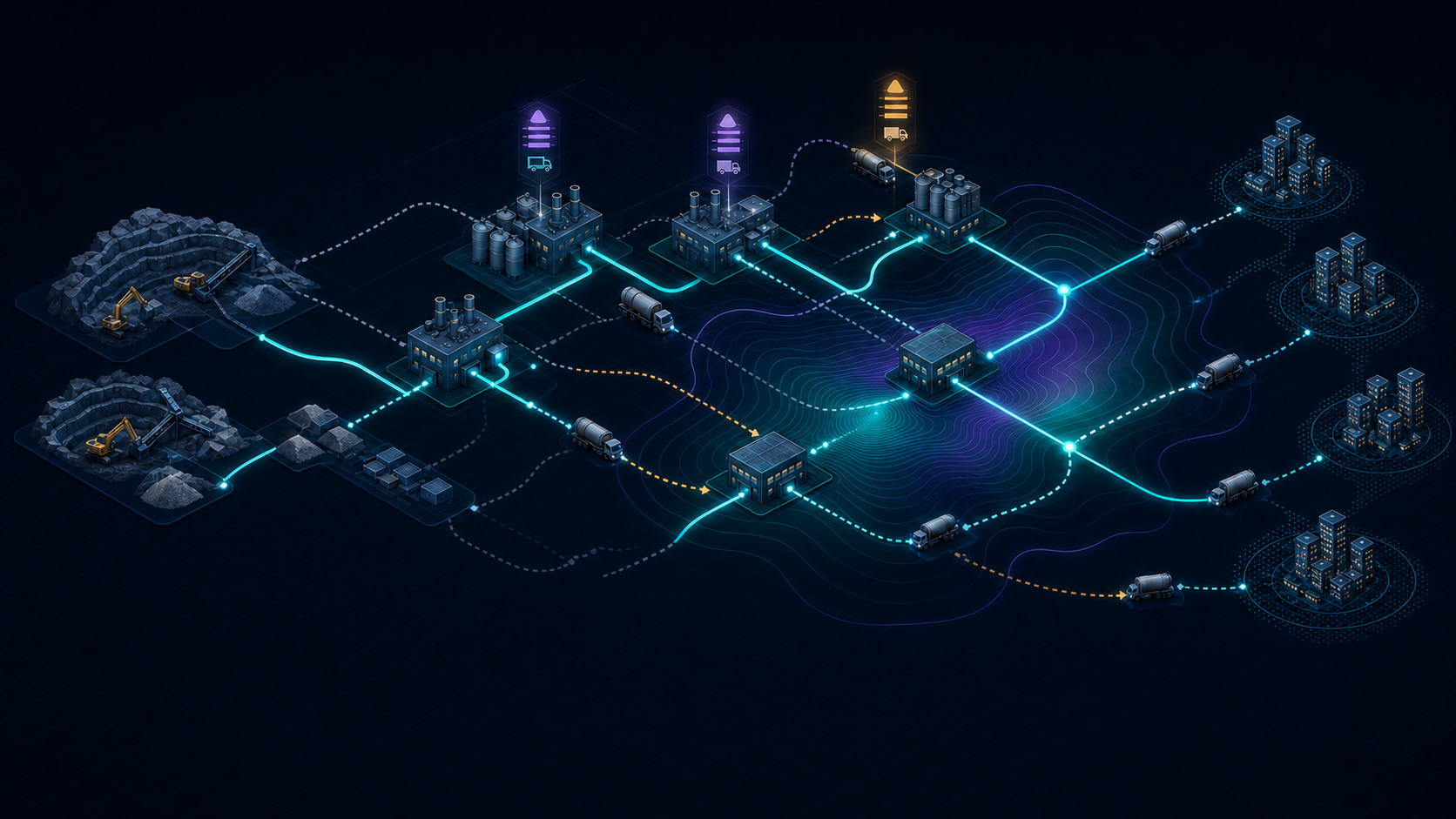
An animated physical supply network follows an illustrative demand increase through a distribution center, an overloaded factory, capacity rebalancing and an expedited material purchase.

Illustrative planning scenario

Six connected planning capabilities

The animated network is an illustrative scenario. The chapters below show the decisions each capability supports, the trade-offs it exposes and the product screens planners use every day.

One plan. Six connected decisions.

01

Signal → shared forecast

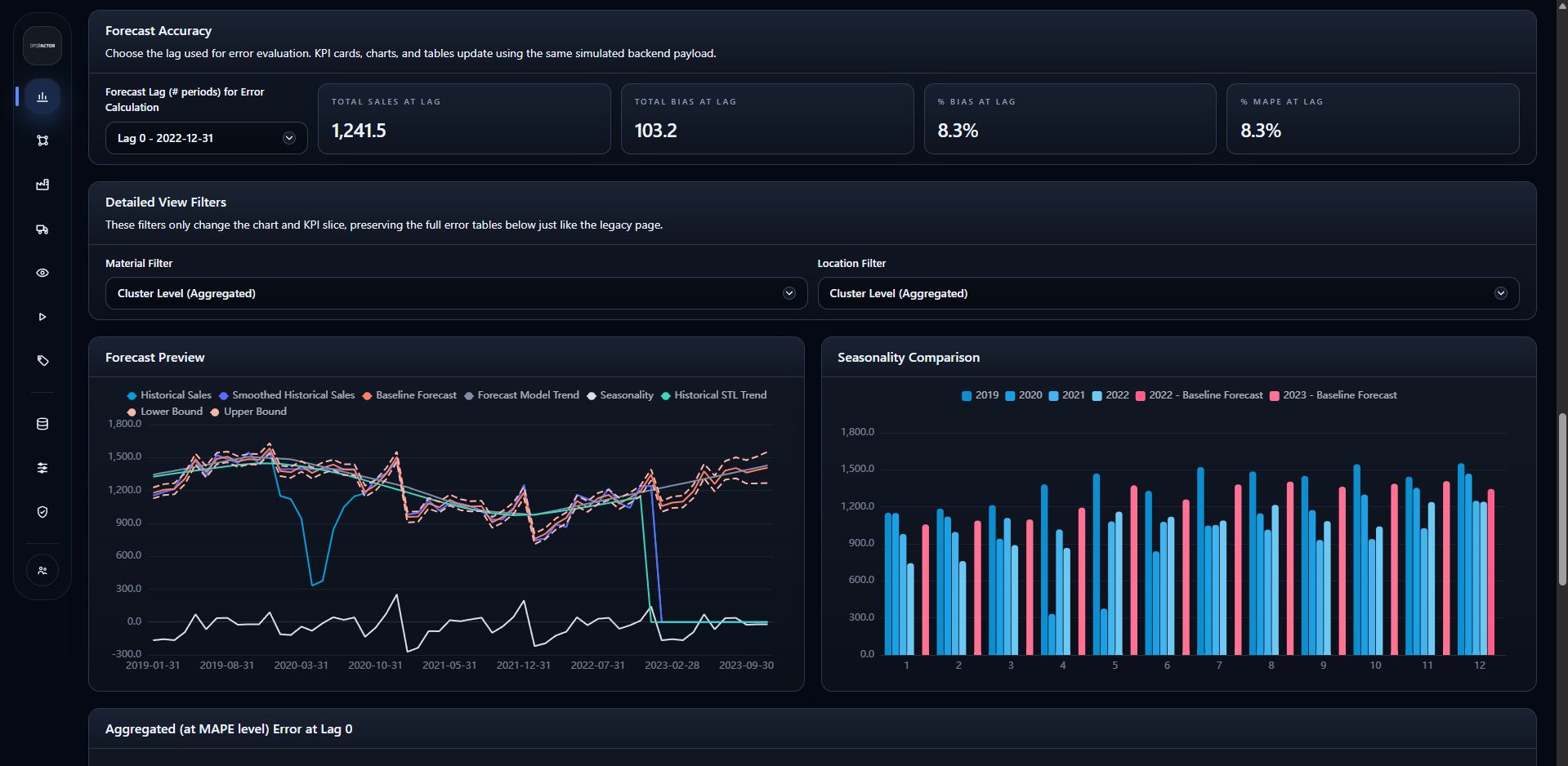
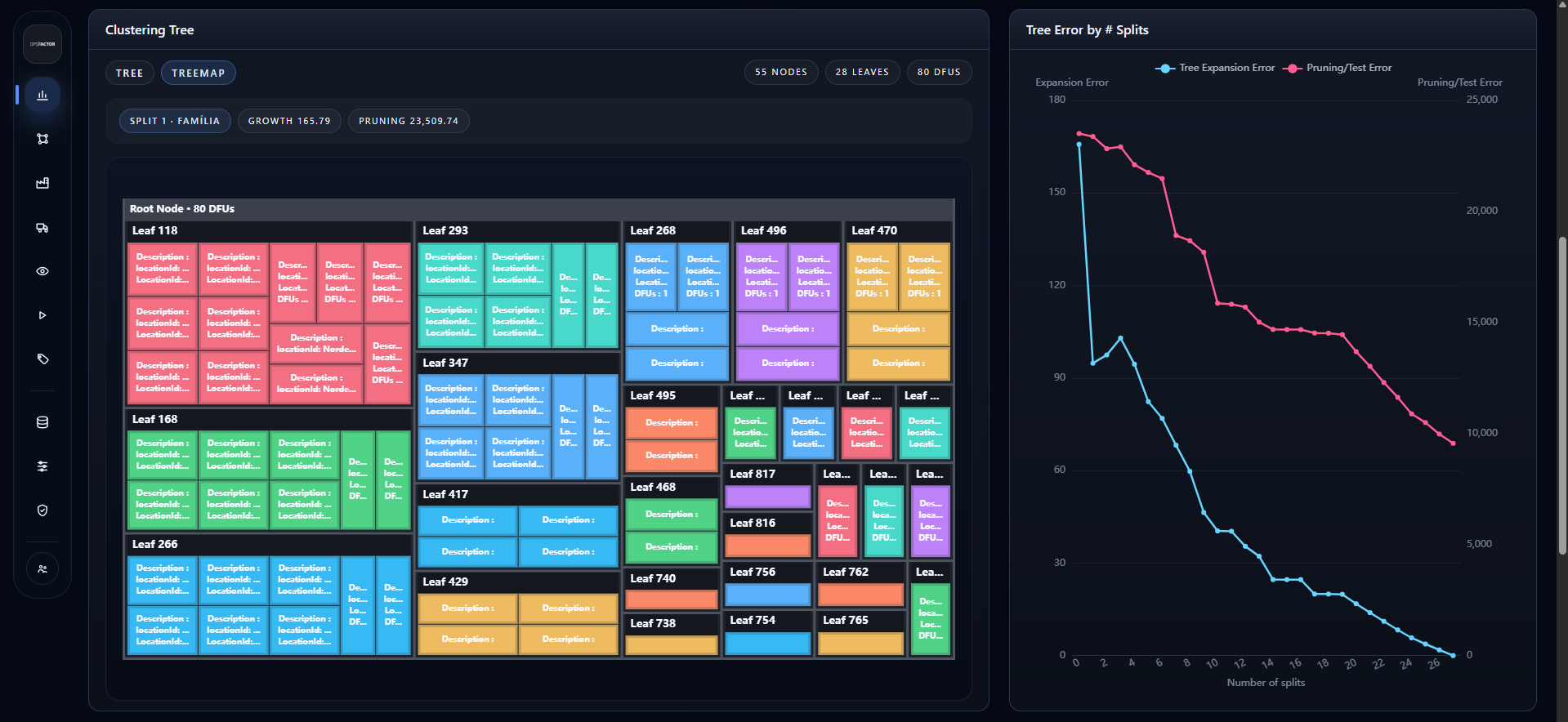
Demand Planning that learns where each forecast behaves differently.

Build a statistical baseline, let AutoFit compare models through historical backtests, and organize products and customers into clusters that deserve different planning treatments.

  • Statistical forecasting and model diagnostics
  • AutoFit model and parameter selection
  • Product and customer clustering by relevant behavior
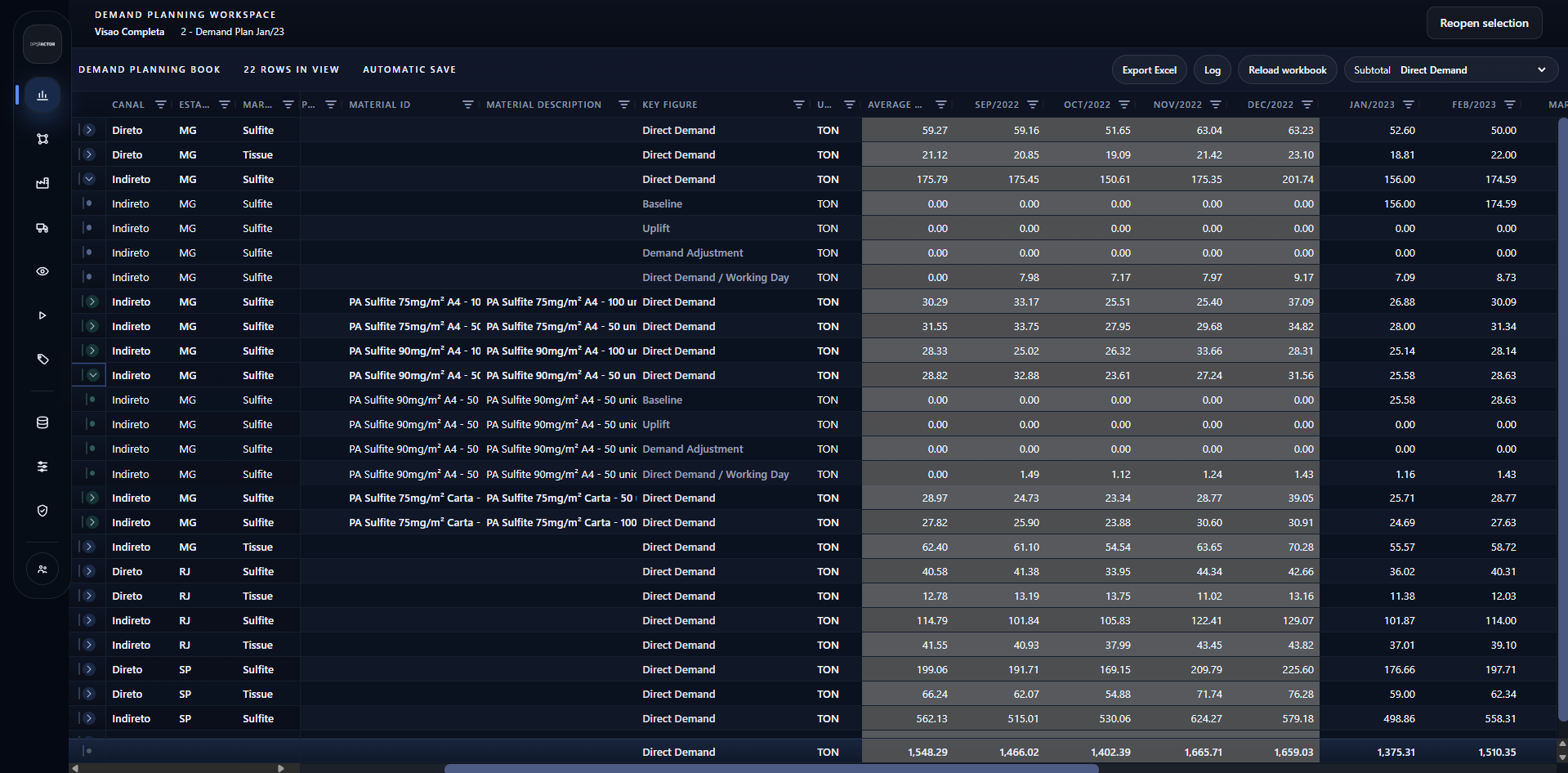
  • Collaborative adjustments in Planning Books

Why it matters Different demand patterns should not be forced through the same model—or the same conversation.

Explore Demand Planning
02

Network design → feasible plan

Design the optimal network. Then prove the plan is feasible.

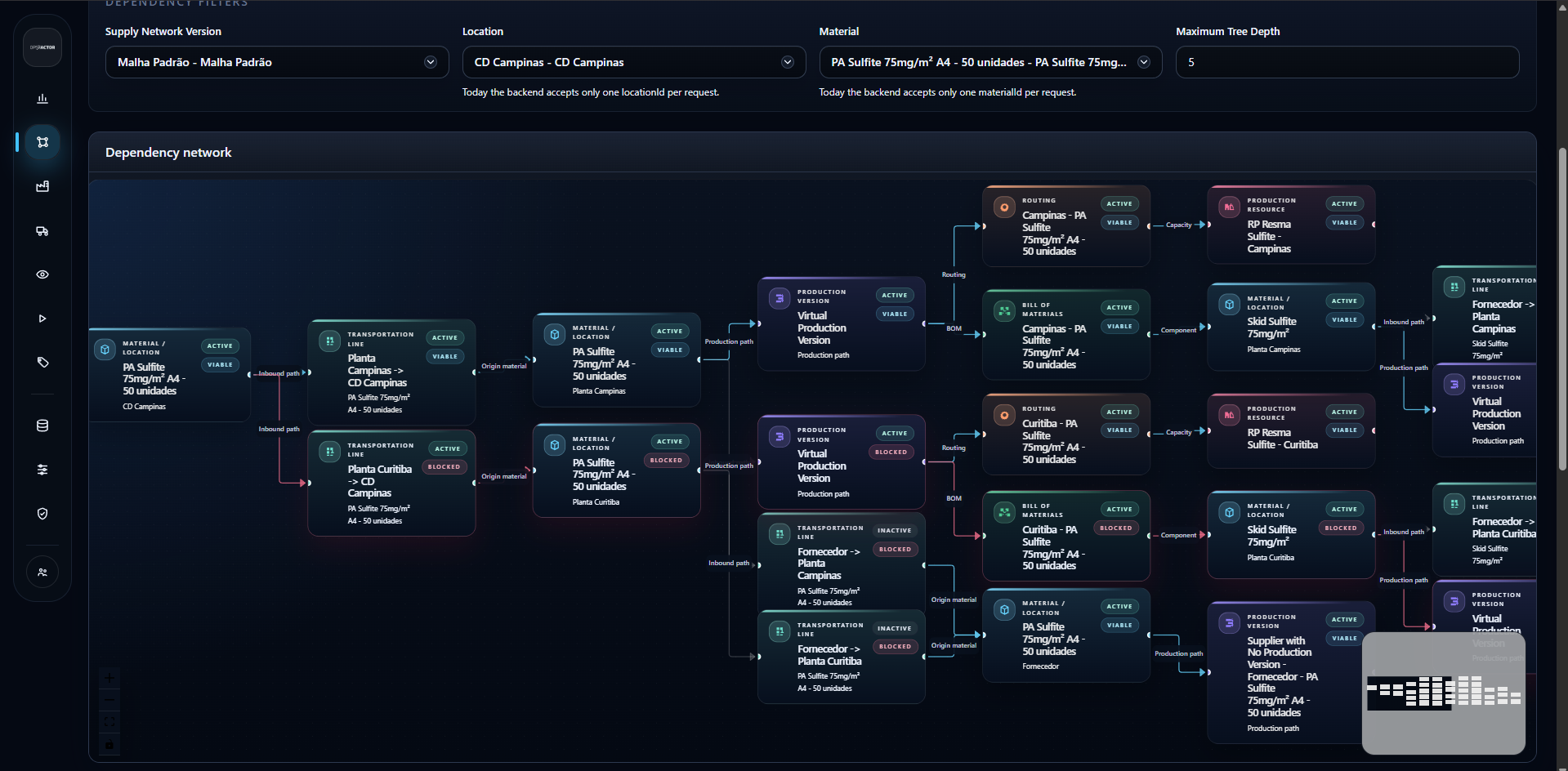
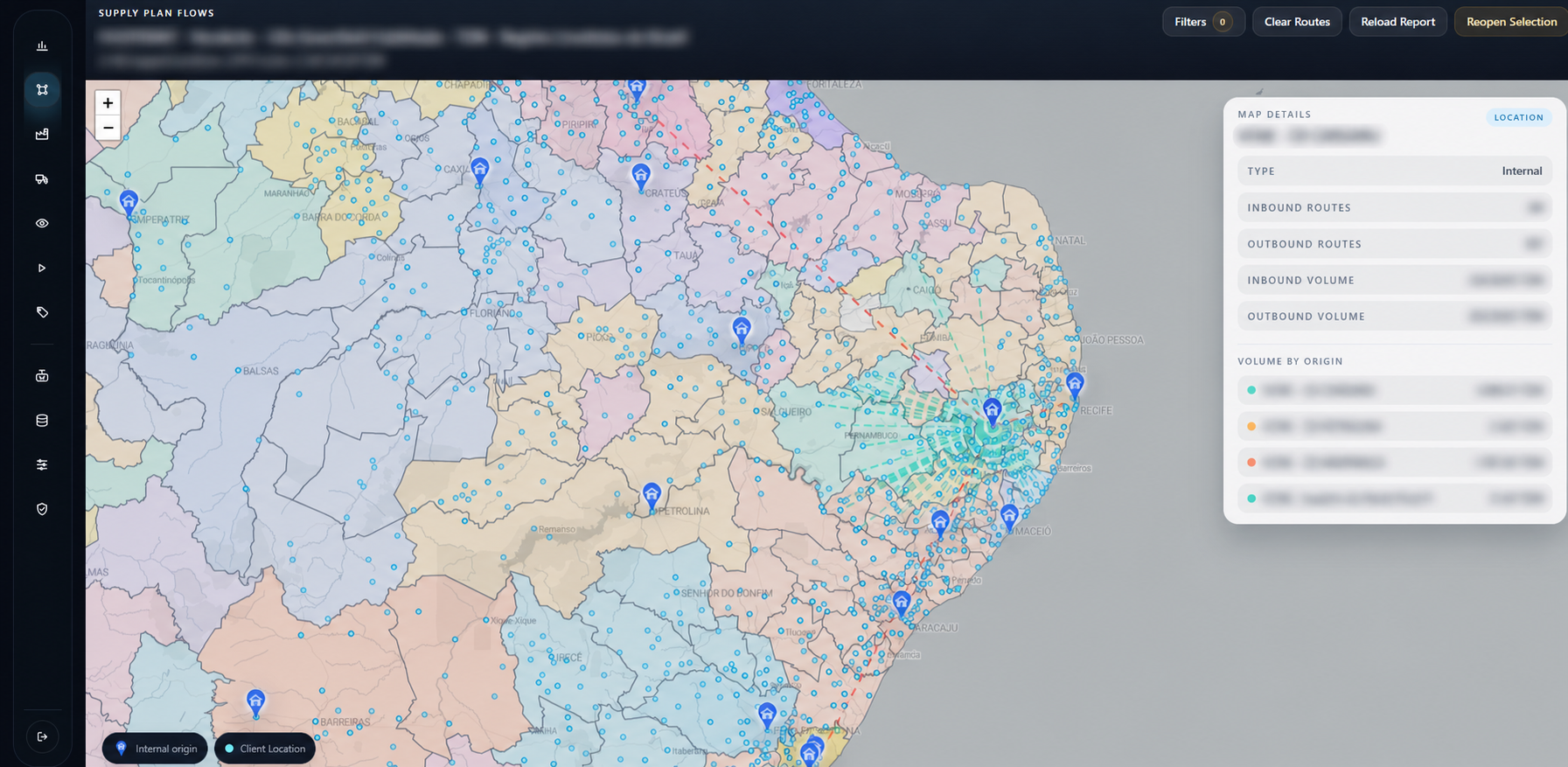
Network design compares as-is, greenfield and brownfield alternatives. Supply Planning then tests the selected structure against tactical production capacity, medium-term restrictions and the constrained demand plan.

Optimal networkStructure, locations, lanes and alternative scenarios.

Feasible planFlows, production capacity, bottlenecks and constrained demand.

  • Supply network modeling and scenario design
  • Greenfield and brownfield alternatives
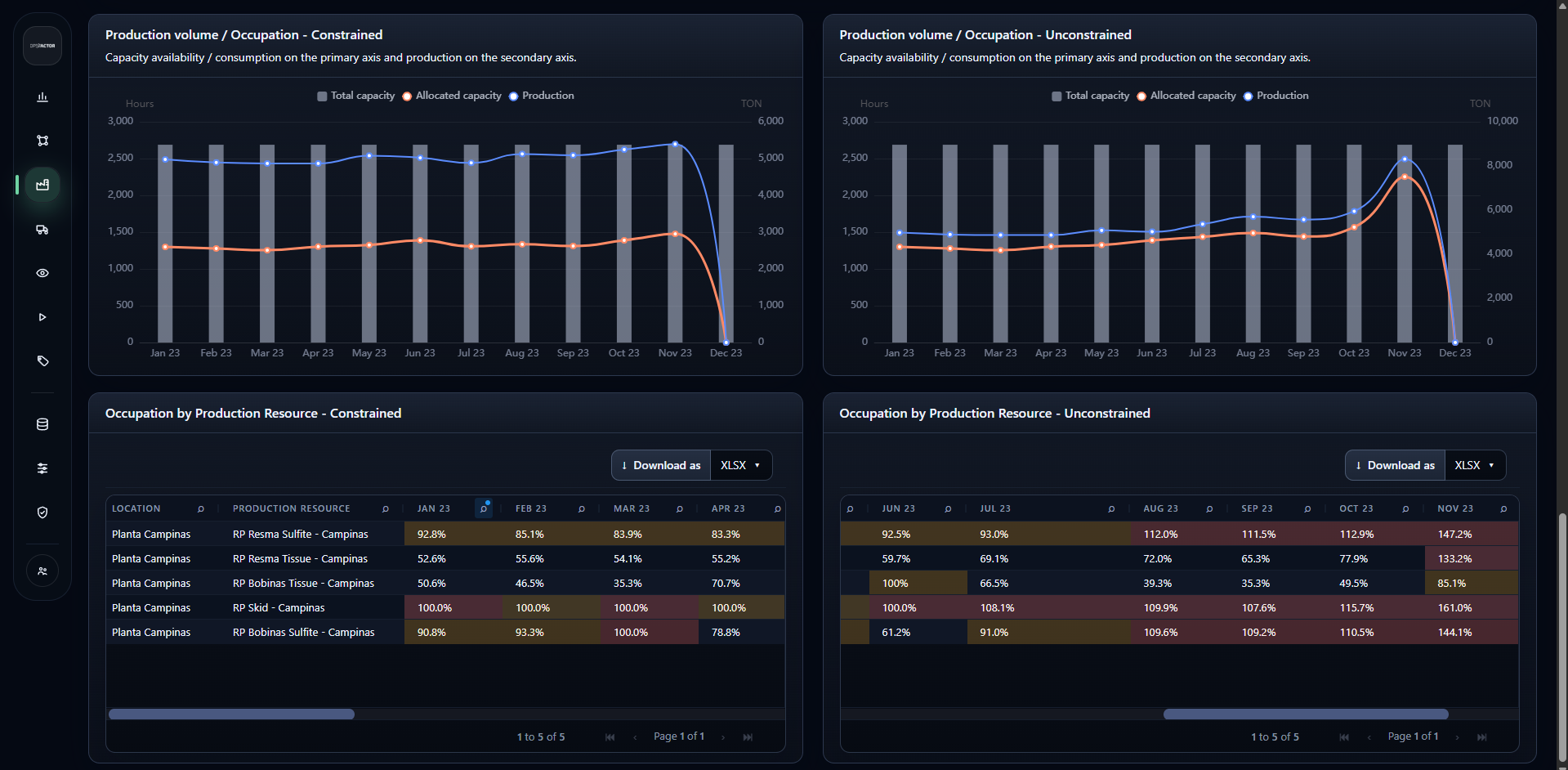
  • Tactical capacity planning and constraint identification
  • Unconstrained, constrained and working plans

Why it matters A growth plan only becomes operational when every lane, plant and bottleneck can be explained.

Explore Supply Network Planning
03

Feasible plan → factory sequence

S&OE and Line Sequencing make the tactical plan executable.

Turn near-term priorities into an executable sequence across resources, shifts and product families, while making setups and capacity conflicts visible before they reach the floor.

  • Short-horizon Sales & Operations Execution
  • Finite-capacity Line Sequencing
  • Resources, shifts, routings and setup logic
  • Hard and soft constraint scoring

Why it matters A plan is only real when the next production decisions fit time, resources and changeovers.

Explore S&OE and Line Sequencing
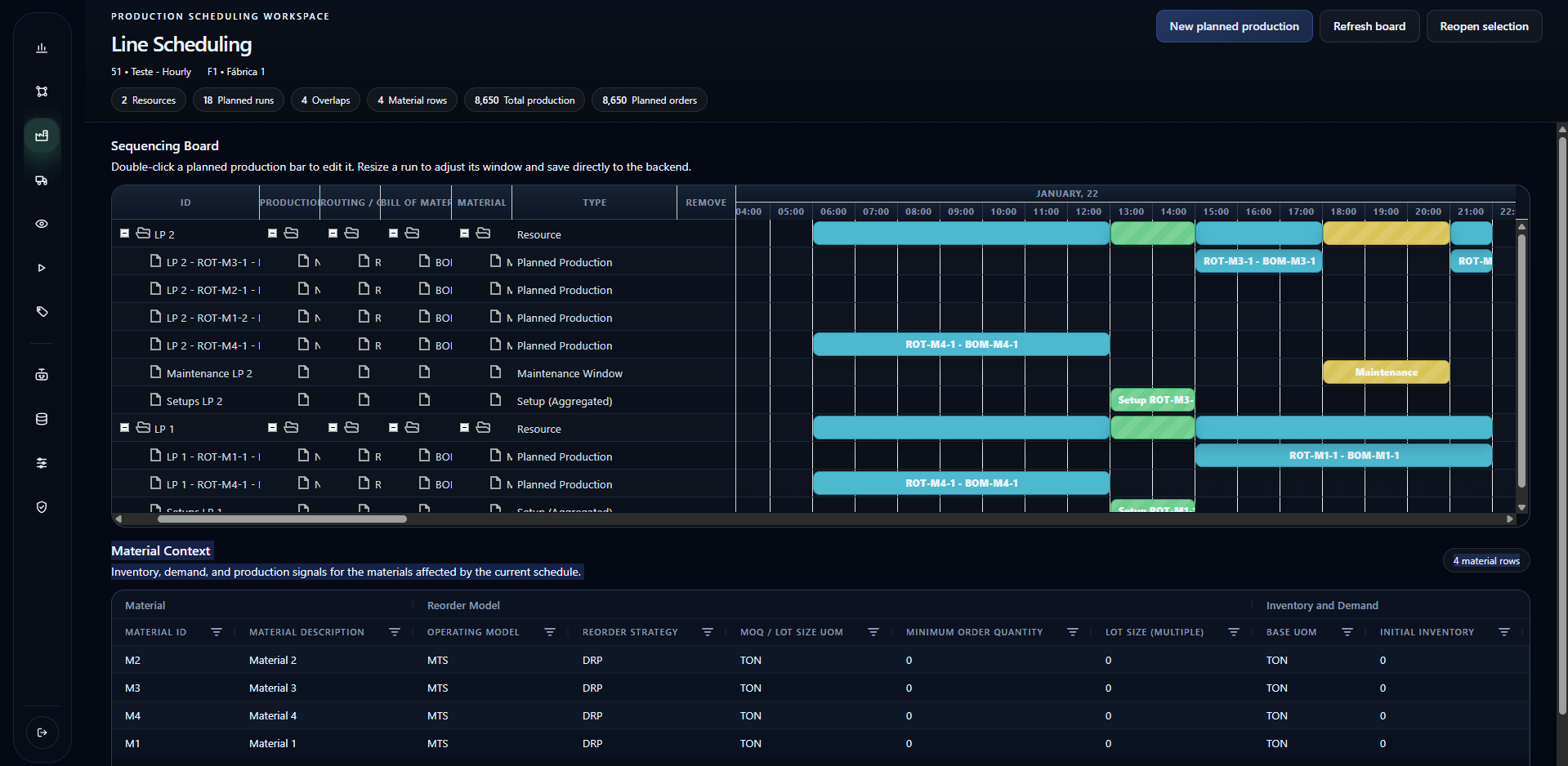
Line sequencing
OpsFactor line sequencing workspace with a finite-capacity production Gantt
Orders sequenced against finite resources, shifts and setup transitions.
04

Supply → deployment

DRP decides who to serve, what to move and how to form each load.

Translate replenishment needs into deployment decisions, allocate constrained supply according to customer and channel priorities, and consolidate transfers into executable loads and vehicles.

  • Multi-echelon replenishment and deployment
  • Fair-share and priority-aware allocation
  • Load building, transfer consolidation and vehicle formation
  • Optional shelf-life and lot-expiration constraints for relevant industries

Why it matters When supply or transport is constrained, service priorities need to become explicit allocation and shipment decisions.

Explore DRP and Load Building
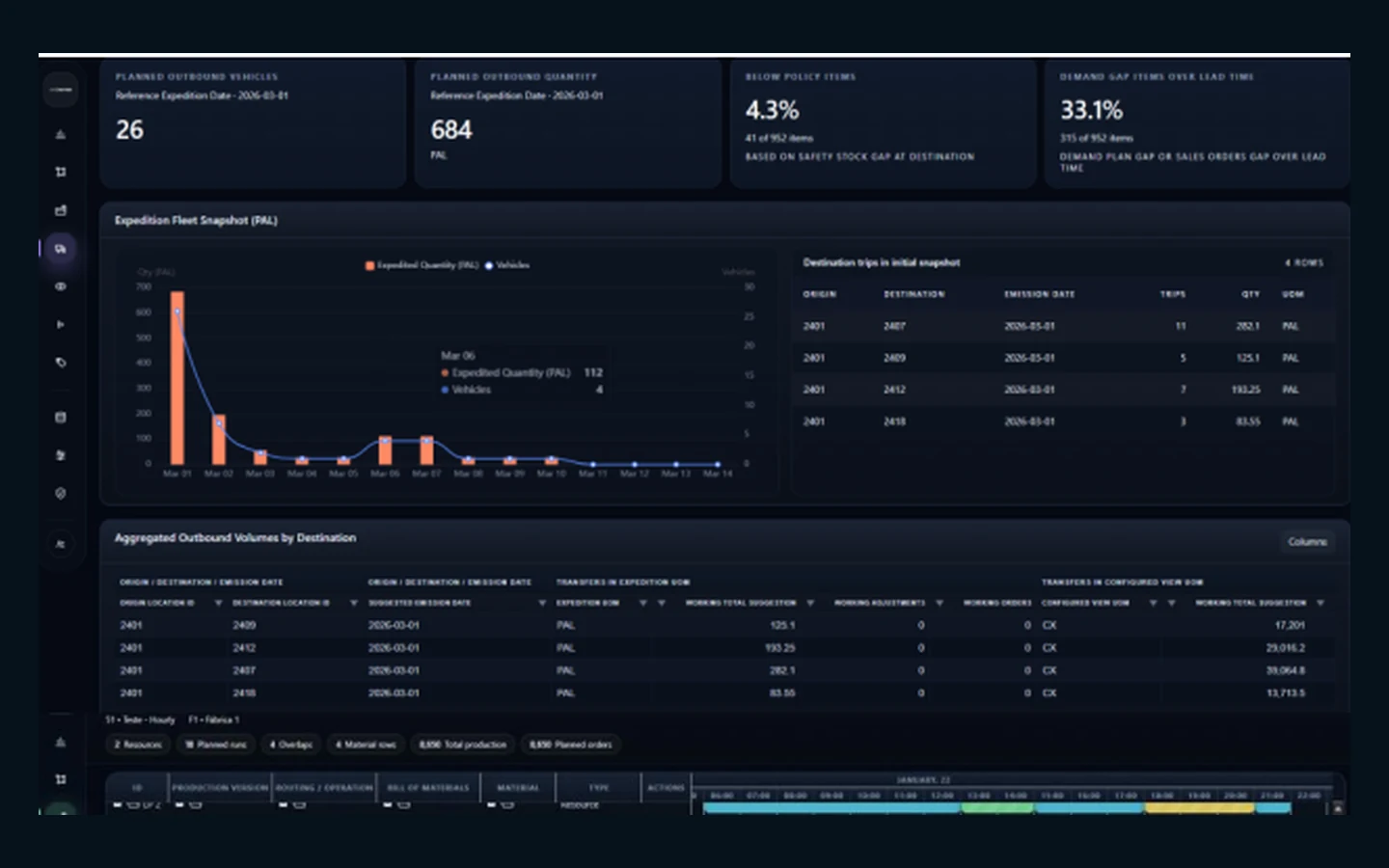
Deployment workspace
OpsFactor distribution requirements planning workspace with deployment and load formation
Deployment needs, customer priorities, transfers and load formation in one operating view.
05

Policy → economic trade-off

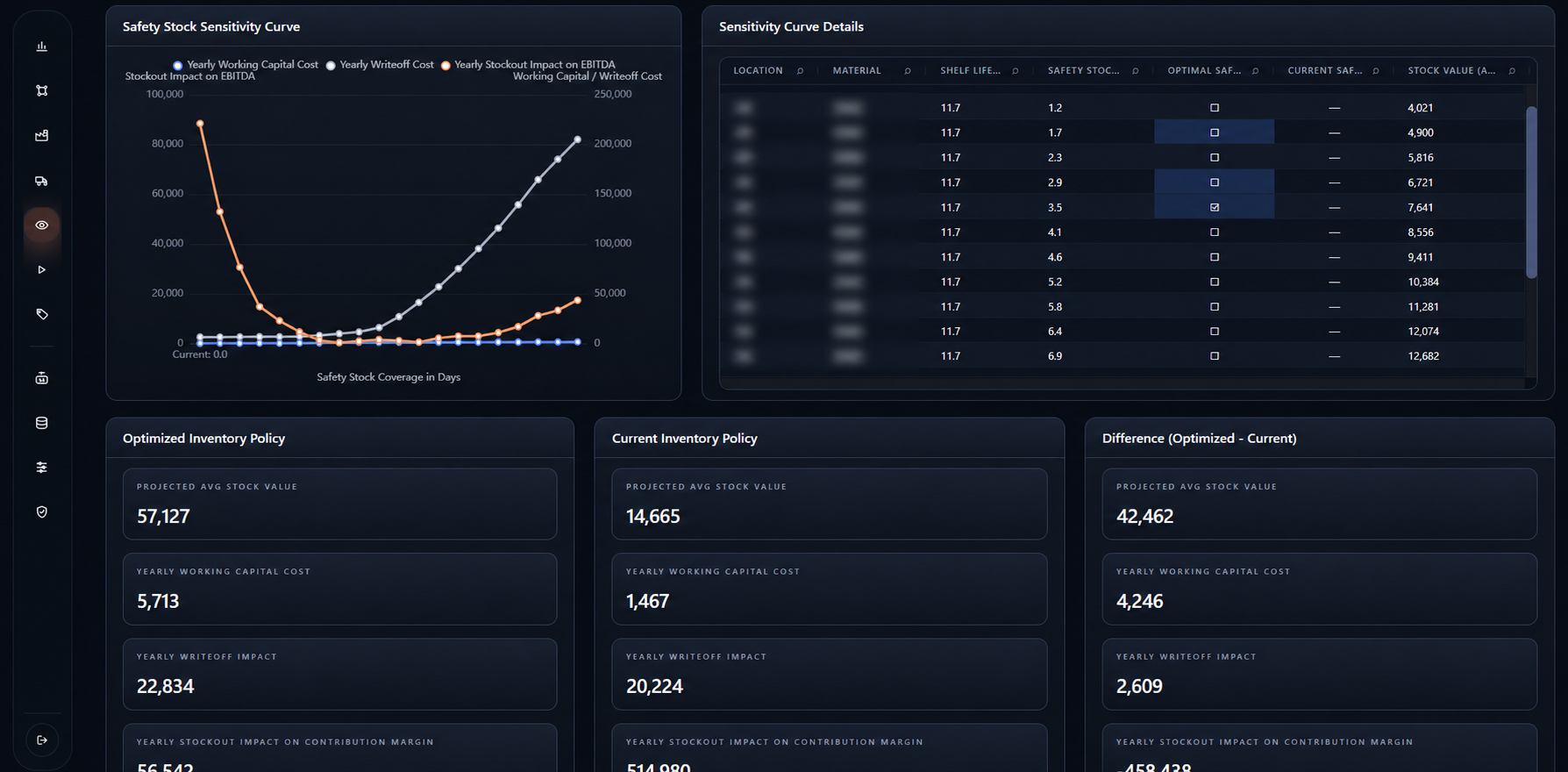
Optimize inventory policy for economic value—not service alone.

Simulate candidate coverage policies through the network and choose the point that balances capital, storage, projected writeoff and the margin lost when stockouts prevent a sale.

  • Stochastic policy and coverage simulation
  • Capital and inventory holding costs
  • Aging and projected writeoff
  • Lost margin from stockout and service risk

Why it matters More inventory can improve service and still destroy value. The optimum sits in the trade-off.

Explore Inventory Optimization
Policy simulation
OpsFactor inventory optimization results comparing coverage policies and economic impact
Coverage policies compared by service, inventory and economic impact.
06

Physical plan → P&L

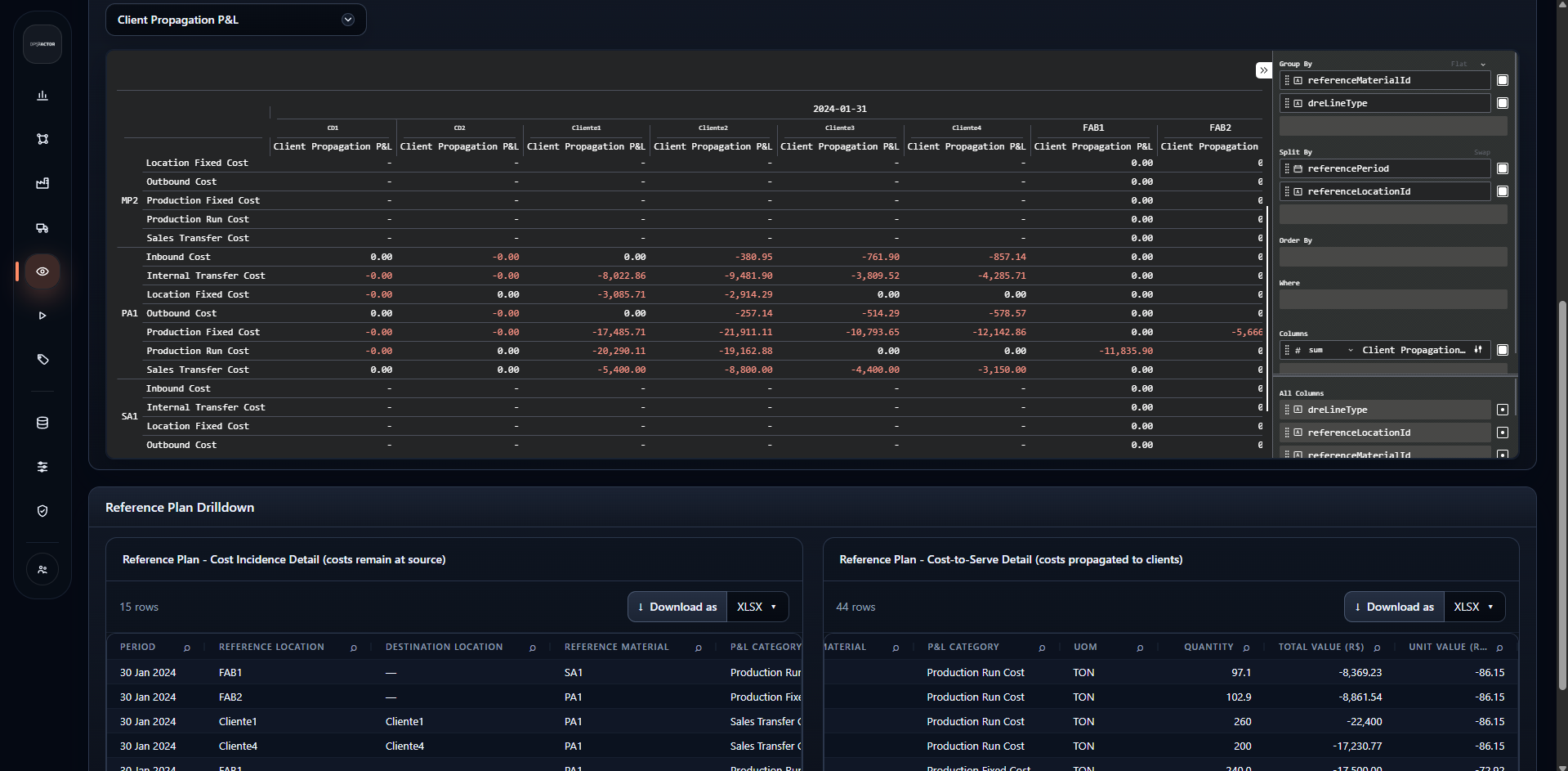
See how every operational choice reaches Cost-to-Serve and P&L.

Propagate the physical plan through revenue, product, production, inventory, logistics, taxes and allocations to understand the true economic contribution of products, customers and channels.

  • Cost-to-Serve by customer, product and channel
  • P&L generated from saved plan outputs
  • Cost propagation and allocation through the network
  • Drill-down from margin to the originating facts

Why it matters Volume, service and efficiency only become comparable when they meet in a shared economic view.

Explore Cost-to-Serve and P&L
Cost-to-Serve & P&L
OpsFactor Cost-to-Serve and P&L workspace with economic contribution drill-down
From operational facts to contribution margin and P&L traceability.

From product to practice

See the decision. Learn the method. Trace the data.

The product experience, implementation guidance and planning concepts live in one connected knowledge system. Start with the question your team needs to answer.

GUIDED JOURNEY

Build a Demand Planning cycle.

Move from master data and historical sales through clustering, AutoFit, execution, analysis and collaboration.

Follow the Demand Planning guide
CONNECTED DATA

Understand every planning input.

Navigate master, transactional, configuration and planning data through explicit dependencies and downstream uses.

Explore the data catalog
PLANNING METHOD

Treat inventory policy as an economic decision.

Understand the trade-off among capital, storage, writeoff, stockout and the margin that service protects.

Read the inventory policy article

Free Community Edition · transparent foundation

Looking for free supply chain planning software?

OpsFactor Community is a free, self-hosted edition for teams that want to inspect the code and begin with demand and supply planning on their own infrastructure. Its transparent Open Core foundation is source-available under the Sustainable Use License.

Start with one planning decision. Expand the process as complexity grows.

Begin with the problem that matters now. Connect demand, supply, inventory and financial decisions as the operation, planning cadence and number of users grow.

Grow the planning model without forcing every team to adopt the full scope on day one—from a focused workflow to a coordinated, multi-business planning system.

Network Design became a repeatable planning capability—not a one-off study.

See how an industrial planning team moved from the as-is network to candidate locations, distribution and manufacturing footprint decisions, and market-level profitability.

Cimento Nacional · Integrated planning

Published case

From the as-is network to footprint choices and market profitability.

The team modeled five plants, two grinding units and six distribution centers, generated location alternatives and compared more than 200 scenarios across distribution, factory vocation and Cost-to-Serve.

~7kplant-to-destination combinations
200+scenarios evaluated
<10 minstrategic scenario runtime
+4.9%potential contribution-margin impact*
* Potential scenario impact reported in an independent logistics publication. Not presented as realized or audited gains.
Cement industrial network connecting raw materials, production, distribution and regional demand through economic trade-offs
  1. 01Baseline the as-is network
  2. 02Generate location candidates
  3. 03Optimize the DC footprint
  4. 04Optimize factory vocation
  5. 05Read Cost-to-Serve by market

Ways to adopt

Choose who operates the platform—and how much support you need.

Run Community on your own infrastructure for free. Choose Pro for an OpsFactor-managed environment and technical support. Choose Enterprise for the complete optimization scope, native AI assistance and functional planning support.

Product screenshot